For most businesses, a website is still treated as a visual asset. In reality, it is a core part of business infrastructure. A professionally built website directly affects lead generation, sales performance, and long-term digital visibility.
This is where many businesses go wrong. They invest in design but ignore performance. They focus on content but overlook structure. The result is a website that exists online but contributes very little to growth.
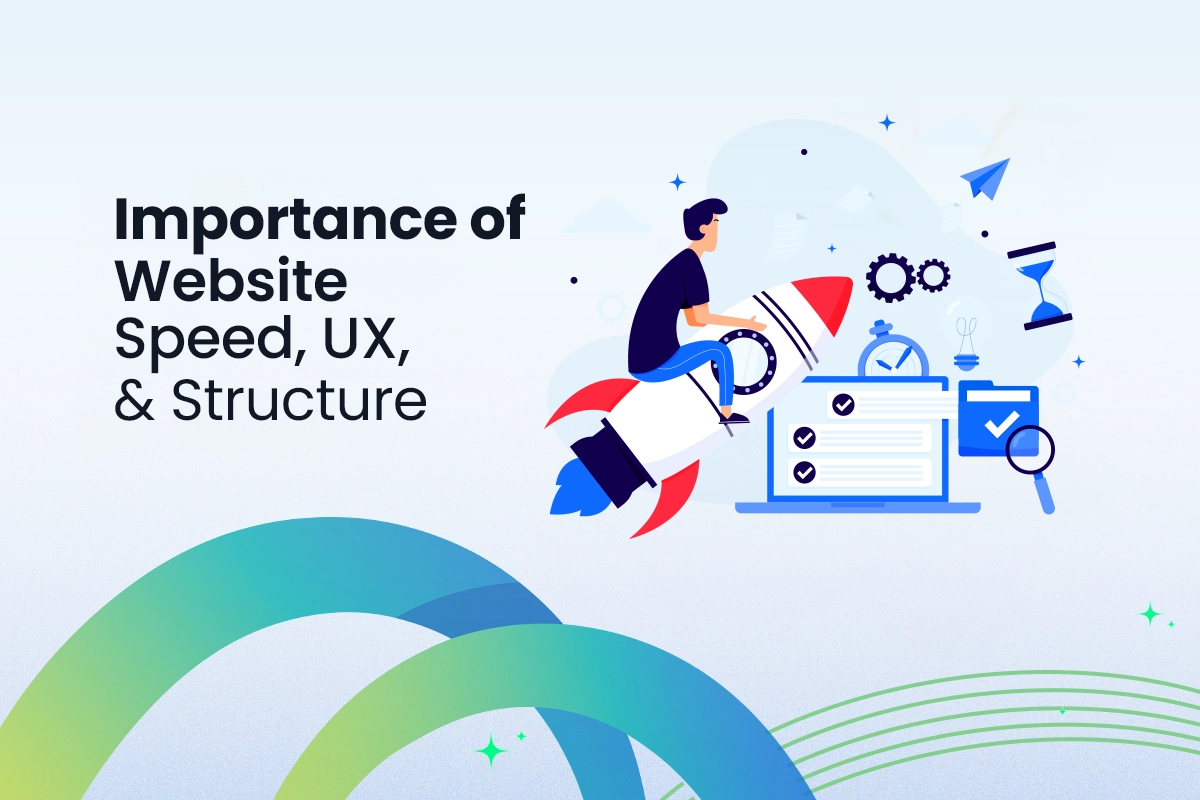
A professional web development company understands that website speed, user experience, and structural architecture are not separate elements. They work together to determine whether a website supports or blocks business growth.
Website Speed Is a Business Performance Issue, Not a Technical One
Website speed is often dismissed as a technical detail, but from a business perspective, it directly impacts revenue.
Slow-loading websites lose users before they even see the content. Search engines also deprioritize slow websites, making it harder to rank organically. For businesses running paid ads, slow speed increases bounce rates and inflates cost per lead.
A professionally developed website is optimized at the code level, server level, and front-end level. This is not something that can be fixed later with plugins or surface-level tweaks. Speed must be built into the website from the beginning.
This is why businesses working with an experienced web development company in India gain a measurable advantage over those relying on cheap or rushed builds.
User Experience Determines Trust and Conversion
User experience is not about visual trends or animations. It is about clarity, flow, and decision-making.
When a visitor lands on a website, they should immediately understand what the business offers, who it is for, and what action to take next. If this process requires effort, users leave.
Poor UX usually comes from websites that are designed without business logic. Pages are cluttered, navigation is confusing, and calls to action are either unclear or missing altogether. Even high-quality traffic fails to convert in such cases.
A professional web development company designs user experience around behaviour, not aesthetics alone. The goal is to reduce friction, guide attention, and make decision-making effortless for the user.
This is where amateur development fails and structured web development succeeds.
Website Structure Controls SEO Visibility and User Flow
Website structure is one of the most ignored aspects of web development, yet it has the strongest impact on SEO and conversions.
Search engines rely on structure to understand page importance, topical relevance, and internal relationships. Users rely on structure to navigate, explore services, and move toward enquiry or purchase.
Websites built without a clear structural hierarchy often struggle to rank, even with good content. Important service pages remain buried. Blog content fails to support core keywords. Authority does not flow properly across the site.
A well-structured website, developed by a professional web development company in Kerala or India, ensures that both users and search engines move through the site logically. This is how visibility and conversions scale together.
Why Speed, UX, and Structure Must Be Built Together
Optimizing one element in isolation does not work.
A fast website with poor UX still fails to convert. A visually impressive website with a weak structure struggles to rank. A well-written website with slow performance loses users before impact.
Real business growth happens only when website speed, user experience, and structural architecture are developed as a single system. This is the difference between a website that looks good and a website that performs.
Professional web development focuses on alignment, not patchwork fixes.
What Businesses Should Evaluate in Their Website
Instead of asking whether a website looks modern, businesses should evaluate whether it performs its core function.
A growth orientated website should load quickly on all devices, communicate value instantly, guide users clearly, and support long-term SEO goals. If any of these fail, the website becomes a liability rather than an asset.
This is why businesses that treat website development as a strategic investment consistently outperform those that treat it as a one-time design task.
Conclusion
A website is not just part of digital marketing. It is the foundation of it.
At Web India Solutions, web development is approached as a business system, not a visual project. Speed, UX, and structure are engineered together to support rankings, conversions, and scalability.
Because a website that cannot grow a business is not complete, no matter how good it looks.