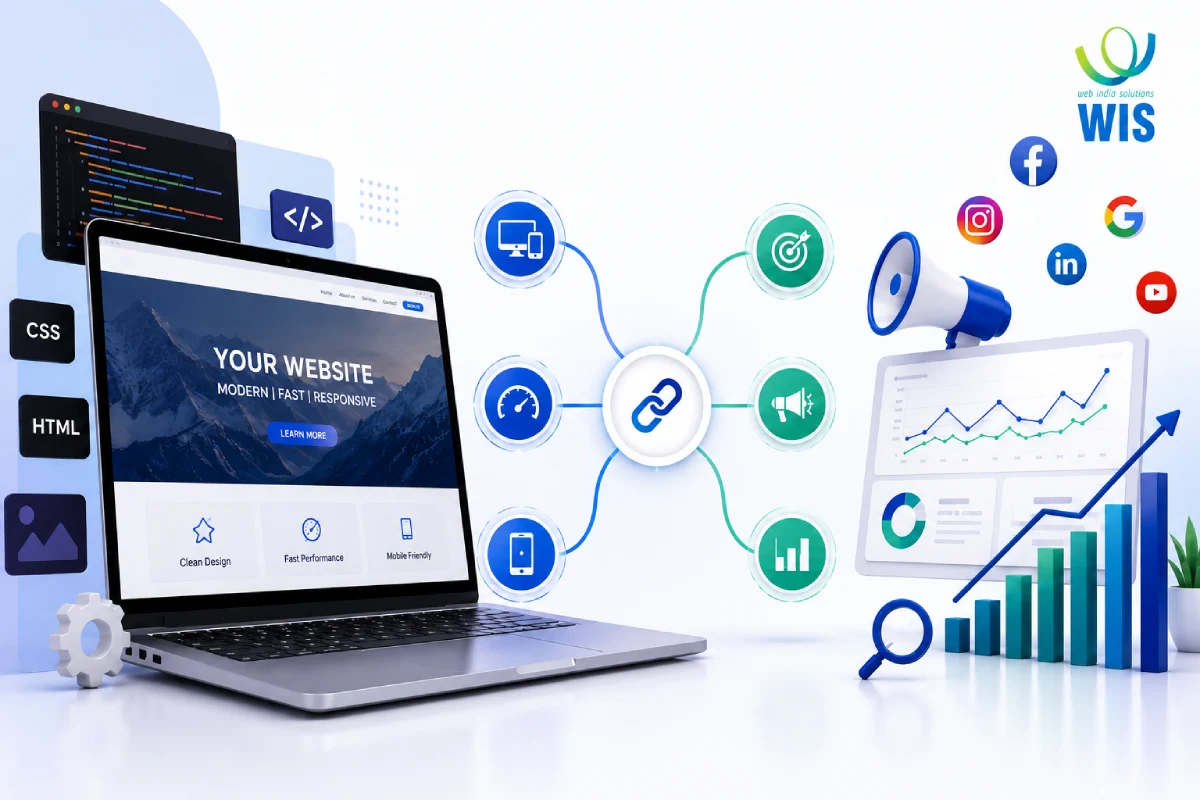

A business website is no longer just an online brochure. It serves as the digital headquarters of your brand, where potential customers learn about your products, evaluate your credibility, and decide whether they want to do business with you. As technology evolves rapidly, customer expectations continue to rise. Websites that looked modern a few years ago can quickly become outdated, slow, and vulnerable to security risks.
Future-proofing your website means building it in a way that allows it to adapt to changing technologies, business growth, and user expectations. Instead of rebuilding your website every few years, modern web development focuses on creating scalable, secure, and flexible platforms that remain effective for the long term.
Partnering with a Web Development Company In India can help businesses create websites that are prepared for future challenges while delivering exceptional user experiences from day one. Whether you own a startup, a growing enterprise, or an established organization, investing in modern web development is one of the smartest decisions you can make.
Why Future-Proofing Matters More Than Ever
The internet changes constantly. New devices, browsers, search engine algorithms, and customer behaviors emerge every year. Businesses that fail to adapt often experience declining traffic, poor customer engagement, and lost revenue. A future-ready website helps you stay competitive by ensuring that your digital presence continues to perform regardless of technological changes. It also reduces maintenance costs since the website is built with flexibility and scalability in mind.
Modern customers expect websites to load instantly, provide seamless navigation, and function perfectly across smartphones, tablets, laptops, and desktops. Meeting these expectations requires more than attractive design—it requires strong development practices.
Modern Web Development Is About More Than Design
Many businesses believe web development is only about creating visually appealing pages. While design plays an important role, modern web development involves much more behind the scenes.
Developers focus on performance, clean coding practices, security, accessibility, scalability, API integrations, responsive frameworks, and future compatibility. Every technical decision impacts how well the website performs today and how easily it can evolve tomorrow.
A professionally developed website is built to support marketing campaigns, business expansion, eCommerce functionality, customer engagement, and emerging technologies without requiring a complete redesign.
Build on a Scalable Foundation
Business growth brings changing requirements. You may eventually need online payments, customer portals, multilingual support, appointment booking, CRM integration, or advanced analytics. A scalable website architecture allows these features to be added without disrupting your existing platform.
Some important characteristics of scalable development include:
- Modular architecture that allows new features to be added easily.
- Flexible databases capable of handling growing customer data.
- Cloud-ready hosting environments that support increasing traffic.
- Clean code structures that simplify future updates and maintenance.
Scalability ensures your website grows alongside your business rather than becoming a limitation.
Prioritize Website Speed
Website speed directly affects user experience, search engine rankings, and conversion rates. Visitors expect pages to load within seconds. Delays often result in abandoned sessions and lost business opportunities. Modern development techniques improve performance through optimized code, image compression, browser caching, lazy loading, content delivery networks (CDNs), and efficient server-side processing.
Fast websites provide several business benefits:
- Better user engagement.
- Lower bounce rates.
- Improved SEO performance.
- Higher conversion rates.
- Greater customer satisfaction.
Performance optimization should be considered during development rather than treated as an afterthought.
Responsive Design Is No Longer Optional
Today, users browse websites from countless devices with varying screen sizes. Mobile traffic often exceeds desktop traffic for many industries, making responsive design essential. Modern responsive development automatically adjusts layouts, navigation, typography, and images to deliver an optimal experience regardless of device. Responsive websites offer advantages beyond usability. Search engines prioritize mobile-friendly websites, making responsive design an important factor in SEO success.
Businesses that ignore mobile optimization risk losing visitors before they even explore their products or services.
Security Should Be Built Into Every Layer
Cybersecurity threats continue to evolve, targeting businesses of every size. Websites that lack proper security measures become vulnerable to hacking, malware, and data breaches. Modern web development incorporates security from the beginning rather than adding it later.
Important security practices include:
- SSL encryption for secure communication.
- Secure authentication systems.
- Regular software updates.
- Protection against SQL injection and cross-site scripting attacks.
- Automated backups and disaster recovery planning.
A secure website protects both your business reputation and customer trust.
Choose Modern Development Technologies
Technology evolves rapidly, and using outdated frameworks can limit your website’s future potential. Modern development often utilizes technologies that provide improved performance, maintainability, and scalability.
Popular approaches include:
- Component-based frontend frameworks.
- API-first development.
- Progressive Web Applications (PWAs).
- Headless CMS architecture.
- Cloud-native deployment strategies.
These technologies allow businesses to adapt more easily as customer expectations and digital platforms evolve.
Focus on User Experience
Future-proof websites prioritize users at every stage of development.
A well-designed user experience encourages visitors to stay longer, explore more pages, and complete desired actions. Key UX considerations include intuitive navigation, clear calls-to-action, readable typography, logical page hierarchy, fast loading times, and accessibility for users with disabilities. Small improvements in usability often lead to significant increases in conversions and customer satisfaction.
Accessibility Creates Better Experiences for Everyone
Accessibility is becoming increasingly important worldwide. Websites should be usable by individuals with visual, auditory, motor, or cognitive impairments. Accessible development includes keyboard navigation, proper heading structures, image alt text, sufficient color contrast, readable fonts, and compatibility with screen readers. Besides improving inclusivity, accessibility also supports better SEO and broader audience reach.
SEO-Friendly Development Supports Long-Term Visibility
Even the most attractive website provides little value if customers cannot find it. Modern development incorporates SEO best practices directly into the website architecture.
Technical SEO includes clean URL structures, optimized metadata, schema markup, XML sitemaps, fast loading pages, secure HTTPS implementation, and mobile responsiveness. When development and SEO work together from the beginning, businesses gain stronger long-term visibility in search results.
Integrate Business Tools Efficiently
Modern businesses rely on multiple digital tools for sales, marketing, customer service, and operations.
A future-ready website should integrate seamlessly with systems such as:
- CRM software.
- Email marketing platforms.
- Live chat solutions.
- Analytics tools.
- Payment gateways.
- ERP systems.
- Marketing automation software.
Proper integrations improve efficiency while reducing manual work across departments.
Content Management Should Be Simple
Business websites require regular updates, including blogs, service pages, product information, case studies, and announcements. A user-friendly content management system allows non-technical staff to update content without depending on developers for every change. Modern CMS platforms also support role-based permissions, workflow approvals, version control, and SEO optimization features.
Easy content management ensures your website remains current and competitive.
Prepare for AI and Automation
Artificial intelligence is reshaping customer interactions across industries. Businesses increasingly use AI-powered chatbots, recommendation engines, content personalization, predictive analytics, and automated customer support. Future-proof websites are developed with flexible architectures that allow AI integrations without extensive redevelopment.
As AI technologies become more accessible, businesses with adaptable websites will adopt innovations much faster.
Cloud Infrastructure Supports Business Growth
Traditional hosting environments often struggle during traffic spikes. Cloud-based infrastructure offers flexibility, reliability, and scalability by automatically adjusting resources according to demand. Cloud hosting also provides improved uptime, disaster recovery capabilities, security monitoring, and global content delivery.
This ensures consistent performance even as your business expands into new markets.
Regular Maintenance Is Essential
Building a website is only the beginning.
Modern websites require continuous monitoring, security updates, performance optimization, plugin management, compatibility testing, and feature improvements. Businesses that neglect maintenance often experience declining performance, security vulnerabilities, and outdated functionality.
A proactive maintenance strategy extends the lifespan of your website while minimizing unexpected downtime.
Measure Performance with Analytics
Future-proofing is an ongoing process that relies on data rather than assumptions.
Modern websites integrate analytics platforms that help businesses understand visitor behavior, traffic sources, conversion paths, user engagement, and technical performance. Regular analysis allows continuous improvements based on real customer interactions rather than guesswork. This data-driven approach ensures your website evolves alongside changing customer expectations.
Why Businesses Choose Professional Development Partners
Developing a future-ready website requires expertise across multiple disciplines, including UI/UX design, frontend development, backend programming, cybersecurity, SEO, cloud infrastructure, and quality assurance. An experienced website development agency india understands how these elements work together to create long-lasting digital solutions. Instead of focusing only on today’s requirements, professional developers build websites that remain reliable, scalable, and competitive for years to come.
Working with experienced professionals also reduces technical debt, improves project efficiency, and ensures your website follows industry best practices from the very beginning.
Final Thoughts
Technology will continue to evolve, customer expectations will rise, and digital competition will become even more intense. Businesses that invest in modern web development today position themselves for sustained growth tomorrow. Future-proofing your website is not about predicting every technological advancement. Instead, it is about building a flexible, secure, scalable, and high-performing platform that can evolve alongside your business.
Choosing a reliable Web Development Company In India enables businesses to create websites that deliver excellent user experiences while remaining adaptable to future innovations. Combined with the expertise of a trusted website development agency india, your business can establish a strong digital foundation that supports long-term success, improves customer engagement, and keeps you ahead in an ever-changing online landscape.