Something has shifted in what Indian businesses expect from their websites and it is happening faster than most people anticipated.
Not long ago, a professionally designed website with clear service pages, a contact form, and decent loading speed was considered more than adequate. Businesses that had this were ahead of the curve. Today, that same website feels like the minimum entry point, a baseline that every serious competitor already has.
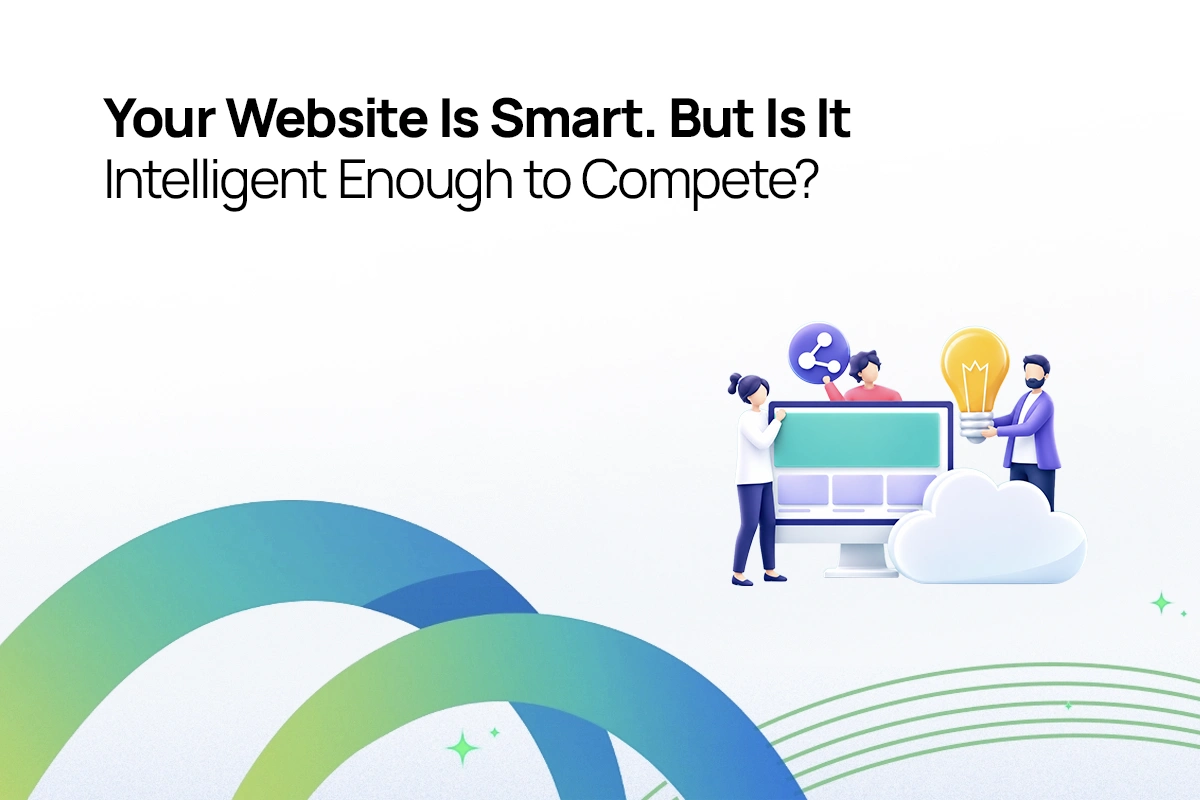
The new differentiator is intelligence. Websites that learn from user behaviour, adapt to individual visitors, respond in real time, and make the overall experience feel genuinely personal are no longer the exclusive territory of large enterprises with massive technology budgets. They are becoming accessible to businesses of every size across India. And the businesses embracing this shift are pulling ahead in ways that are difficult for slower movers to catch up with.
At Web India Solutions, we have watched this transition accelerate over the past few years. As a full service web development company in India with over 18 years of experience, we have seen technology cycles come and go. This one feels different not because AI is new, but because it has finally reached a point where it is genuinely practical, genuinely affordable, and genuinely transformative for the kinds of businesses we work with every day.
What an AI-Powered Website Actually Means
Before going further, it is worth being precise about what AI integration in a website actually looks like in practice because the term gets used loosely and means very different things depending on the context.
An AI-powered website is not simply a website that was designed using AI tools or generated by an AI content platform. It is a website where artificial intelligence is actively working within the user experience itself processing information, making decisions, and delivering personalized, dynamic responses in real time based on what each individual visitor is doing.
In practical terms, this can look like several different things depending on the nature of the business and its goals.
It might be a conversational AI assistant that engages visitors the moment they arrive, answers their specific questions, guides them toward the right service or product, and hands off seamlessly to a human team member when the conversation reaches a point that requires it.
Unlike the rigid chatbots of a few years ago which could only respond to a fixed set of pre-programmed triggers, modern AI assistants understand natural language, handle unexpected questions, and maintain context throughout a conversation.
It might be a personalisation engine that tracks how a visitor navigates the website and dynamically adjusts what content is shown based on their behaviour. A visitor who has spent time reading about a specific service category automatically sees more relevant content, targeted recommendations, and contextually appropriate calls to action on subsequent pages rather than the same generic experience every other visitor receives.
It might be an intelligent search system that understands the intent behind a query rather than just matching keywords. A visitor searching for something on a website powered by AI search gets results that genuinely reflect what they were looking for, even if their exact phrasing did not match the language used on any specific page.
It might be a predictive lead scoring system that evaluates visitor behaviour signals and identifies which visitors are most likely to convert allowing businesses to prioritise their follow-up efforts and engage high-intent prospects at exactly the right moment.
It might be an automated content recommendation system that presents visitors with the most relevant blog articles, case studies, or resources based on their current page and browsing history keeping them engaged and moving deeper into the website rather than leaving after a single page visit.
All of these capabilities share a common underlying quality. They make the website feel less like a static information repository and more like an intelligent, responsive system that is actively working to understand and serve each individual visitor.
Why Indian Businesses Are Adopting AI-Powered Websites Now
The timing of this shift in India is not accidental. Several factors are converging simultaneously to make AI-powered web development both more accessible and more necessary than it has ever been before.
User Expectations Have Risen Dramatically
Indian internet users particularly in urban markets are now deeply familiar with AI-powered experiences from the apps and platforms they use daily. Personalised recommendations on streaming platforms, conversational interfaces on banking apps, and intelligent search on e-commerce platforms have all trained users to expect a certain level of responsiveness and relevance from their digital interactions.
When those same users visit a business website that offers a static, one-size-fits-all experience, the gap between what they expect and what they receive is immediately felt even if they cannot articulate exactly why the experience feels less satisfying. That gap is increasingly translating into higher bounce rates, lower engagement, and reduced conversions for businesses that have not kept pace with rising expectations.
Competition for Attention Has Intensified
Every business sector in India has become more competitive online over the past several years. More businesses are investing in professional web development. More businesses are running digital marketing campaigns. More businesses are competing for the same search positions and the same audience attention.
In this environment, the businesses that stand out are the ones creating genuinely superior experiences. An AI-powered website that engages visitors personally, responds to their specific needs, and guides them efficiently toward a decision is a meaningfully better experience than a competitor’s static website and in a competitive market, meaningfully better experiences translate directly into competitive advantage.
The Technology Has Become Practical and Affordable
Earlier iterations of AI-powered web functionality were often expensive to build, complex to maintain, and inconsistent in their performance. The landscape has changed significantly. The underlying technologies that power intelligent web experiences have matured, become more reliable, and become substantially more accessible in terms of cost.
A professional web development company in India can now integrate genuinely powerful AI capabilities into websites for businesses that would never have considered this kind of technology affordable even a few years ago. The investment required to build an AI-powered website is no longer prohibitive and the return on that investment, measured in engagement, conversion rates, and customer satisfaction, is increasingly compelling.
Google Is Rewarding Better User Experiences
Search engines have made it increasingly clear that user experience signals play a meaningful role in search rankings. Websites where users stay longer, engage more deeply, and return more frequently send stronger positive signals to Google than websites where users arrive and leave quickly.
AI-powered personalisation and engagement tools directly improve these user behaviour signals. Visitors who encounter a website that feels genuinely responsive to their needs stay longer, visit more pages, and come back more often. For a web development company in India focused on building websites that perform in search results as well as with human visitors, integrating AI capabilities is becoming a natural part of delivering that outcome.
The Business Impact That Matters Most
Understanding what AI-powered websites can do technically is one thing. Understanding what they actually deliver for businesses is the question that matters most.
Higher Conversion Rates
Personalised experiences convert at higher rates than generic ones. When a website shows visitors content, products, and calls to action that are genuinely relevant to what brought them there, the probability of that visitor taking a meaningful action submitting an enquiry, requesting a quote, making a purchase, booking a consultation increases significantly.
For a business that generates most of its leads through its website, even a modest improvement in conversion rate has a substantial impact on revenue. AI-powered personalisation consistently delivers those improvements.
Better Quality Leads
AI-powered tools do not just attract more enquiries, they attract better ones. An intelligent lead qualification system that helps visitors self-identify their needs and matches them to the most relevant solution reduces the volume of poorly matched enquiries and increases the proportion of high-quality ones. For businesses where the cost of time spent on unsuitable leads is significant, this improvement in lead quality has direct commercial value.
Stronger Customer Retention
AI-powered websites are not just effective at converting first-time visitors, they are also powerful tools for retaining existing customers. Personalised content recommendations, intelligent product suggestions for returning customers, and proactive communication through AI-assisted tools all contribute to a customer experience that builds loyalty over time.
Reduced Operational Costs
AI assistants and chatbots that can handle a significant proportion of initial customer enquiries, provide accurate information, and complete basic transactions without human involvement reduce the operational cost of managing customer communication. For businesses that previously needed to staff large customer service teams to handle online enquiries, the efficiency gains from well-implemented AI tools are substantial.
What Makes an AI-Powered Website Implementation Successful
Not every AI integration delivers the results businesses hope for. The difference between implementations that work and those that disappoint comes down to how thoughtfully the technology is applied.
The starting point is always a clear understanding of the specific problems the business is trying to solve. AI tools are not universally beneficial, they are beneficial when they are applied to genuine friction points in the user journey where intelligent automation or personalisation can make a meaningful difference.
The quality of the underlying data also matters enormously. AI systems learn from the data they are given. A website with a strong foundation of well-structured content, clean analytics, and clearly defined user journeys gives AI tools the raw material they need to work effectively. A website with poor content quality and unclear information architecture will not benefit from AI integration in the way a better-prepared website will.
The integration must also feel natural to the user. AI functionality that feels intrusive, interruptive, or confusing does more damage to the user experience than no AI integration at all. The best implementations are the ones users barely notice, because the experience simply feels more responsive, more relevant, and more helpful than what they are used to.
Finally, ongoing optimisation is essential. AI systems improve with time and data. An implementation that is monitored, measured, and refined based on real user behaviour will consistently outperform one that is deployed and left unchanged.
As an experienced web development company in India, Web India Solutions understands all of these dimensions of successful AI integration and brings that understanding to every project where these capabilities are appropriate.
How Web India Solutions Is Building AI Ready Websites for Indian Businesses
At Web India Solutions, we have been tracking the development of AI capabilities in web technology closely and integrating them into our projects in ways that deliver genuine, measurable value for the businesses we work with.
Our approach to AI powered web development starts with strategy rather than technology. Before recommending any specific AI integration, we work to understand the business’s goals, its customers’ needs, and the specific points in the user journey where intelligent functionality can make the biggest difference.
We build on solid technical foundations because AI-powered features require well-structured, fast-loading, technically sound websites to perform at their best. Every website we build as a web development company in India is engineered to support the kind of sophisticated functionality that AI integration demands, whether that integration happens at the point of launch or is added as the business grows.
Our development team works across the full stack combining front end design expertise with back end development capability to build AI integrations that work seamlessly within the overall website experience rather than feeling like additions bolted on from outside.
And we build for the long term. The AI landscape is evolving rapidly. The websites we build are designed to adapt as new capabilities become available so our clients are not locked into yesterday’s technology as the field continues to advance.
Whether you are looking to integrate a conversational AI tool, build a personalisation engine, implement intelligent search, or explore other AI-powered capabilities for your business website, Web India Solutions has the expertise to help you do it right.
Final Thought
The shift toward AI-powered websites in India is not a distant future trend. It is happening now, across every business sector, at a pace that is only going to accelerate. The businesses building these capabilities into their websites today are establishing competitive advantages that will be increasingly difficult for slower movers to overcome.
A static website was once a differentiator. Then it became a baseline. AI-powered web experiences are following the same trajectory and the window for establishing an early advantage is still open for the businesses ready to move.
If your business is ready to explore what AI-powered web development can do for your online presence, customer experience, and commercial results, Web India Solutions is the web development company in India with the experience, capability, and strategic understanding to help you build it.
The new standard is here. The question is whether your website is going to set it or chase it.