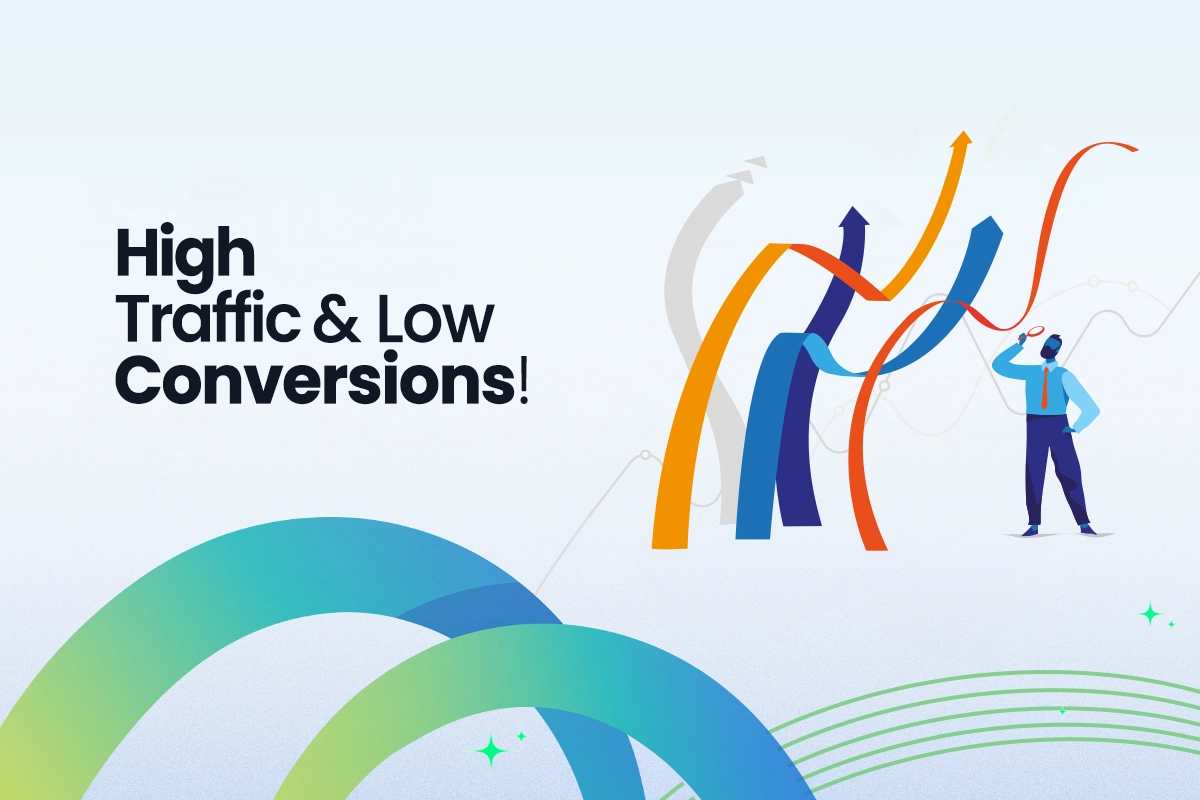
You’ve done it. Your website is getting thousands of visitors every month. The analytics dashboard shows impressive numbers, and your traffic graphs are pointing upward. But here’s the problem: your sales aren’t matching those numbers.
If you’re getting plenty of traffic but few conversions, you’re not alone. This is one of the most common frustrations business owners face. The good news? This gap can be fixed, and we’re going to show you exactly how.
Understanding the Problem
Think of your website like a store in a busy shopping mall. Lots of people walk in, look around, but then leave without buying anything. High traffic with low conversions means people are interested enough to visit, but something is stopping them from taking action.
This “something” could be unclear messaging, a confusing website, trust issues, or simply not showing visitors what they need at the right time. Let’s analyze the most typical offenders and their remedies.
1. Your Website Takes Too Long to Load
Here’s a hard truth: if your website takes more than three seconds to load, you’re losing visitors before they even see what you offer.
Why it matters: People are impatient online. A slow website signals unprofessionalism and frustrates potential customers.
How to fix it:
- Compress your images without losing quality
- Remove unnecessary plugins or code
- Use a reliable hosting service
- Enable browser caching
Think of it like waiting in line at a coffee shop. If it takes too long, people will leave and go somewhere else.
2. Your Message Isn’t Clear
Visitors should understand what you do and why it matters within five seconds of landing on your page. If they’re confused, they’ll leave.
Why it matters: People don’t have time to figure out what you’re selling. If your value isn’t immediately obvious, they’ll move on to a competitor.
How to fix it:
- Write a clear, simple headline that explains what you offer
- Use straightforward language, not industry jargon
- Show benefits, not just features
- Make sure your most important message is above the fold (visible without scrolling)
For example, instead of “We provide synergistic B2B solutions,” try “We help businesses get more customers through digital marketing.”
3. Your Call-to-Action Is Weak or Hidden
A call-to-action (CTA) tells visitors what to do next. If it’s unclear, too small, or buried at the bottom of the page, people won’t take action.
Why it matters: Even interested visitors need clear direction. Without a strong CTA, they might like what they see but not know how to proceed.
How to fix it:
- Use action-oriented language (“Get Started,” “Book Your Free Consultation,” “Download Now”)
- Make CTA buttons stand out with contrasting colors
- Place CTAs in multiple spots on your page
- Keep forms short and simple
4. Your Website Looks Outdated or Unprofessional
First impressions happen in milliseconds. An outdated design makes visitors question whether your business is legitimate or still operating.
Why it matters: People judge websites the same way they judge storefronts. A modern, professional design builds trust instantly.
How to fix it:
- Use clean, modern design principles
- Ensure your site looks good on phones and tablets (mobile-responsive)
- Use professional images, not low-quality stock photos
- Keep your design consistent across all pages
5. You’re Attracting the Wrong Traffic
Not all traffic is good traffic. If the people visiting your site aren’t actually interested in what you offer, they won’t convert no matter how good your website is.
Why it matters: 10,000 random visitors are worth less than 100 targeted visitors who actually need your service.
How to fix it:
- Review your keywords and targeting
- Create content that speaks to your ideal customer
- Use specific, long-tail keywords instead of broad terms
- Check where your traffic is coming from and adjust your strategy
6. People Don’t Trust You Yet
Online shoppers are cautious. Without trust signals, they won’t feel comfortable buying from you or sharing their information.
Why it matters: Trust is the foundation of online conversions. People need to feel safe before they’ll take action.
How to fix it:
- Add customer testimonials and reviews
- Display trust badges and security certifications
- Include real photos of your team
- Share case studies or success stories
- Make your contact information easy to find
- Show social proof (number of customers served, years in business, etc.)
7. Your Checkout or Sign-Up Process Is Too Complicated
Every extra step, field, or click is an opportunity for people to abandon the process.
Why it matters: The more friction in your conversion process, the fewer people will complete it.
How to fix it:
- Reduce form fields to only what’s essential
- Allow guest checkout if you’re selling products
- Show progress indicators for multi-step processes
- Remove distractions on conversion pages
- Offer multiple payment options
8. You’re Not Following Up
Most people don’t convert on their first visit. If you’re not capturing leads and following up, you’re leaving money on the table.
Why it matters: Building relationships takes time. Stay-in-touch strategies can turn hesitant visitors into customers.
How to fix it:
- Use email marketing to nurture leads
- Offer lead magnets (free guides, checklists, consultations)
- Set up retargeting ads
- Create automated email sequences
- Provide valuable content that keeps you top-of-mind
Take Action Today
The gap between high traffic and low conversions doesn’t fix itself, but the good news is that small improvements can lead to big results. Start with one or two of these strategies and measure the impact. Even a small increase in conversion rate can dramatically boost your revenue.
Remember, getting traffic is only half the battle. Converting that traffic into customers is where real business growth happens.
Need help turning your website visitors into customers? Our team specializes in conversion optimization and can help identify exactly what’s holding your site back. Get in touch for a free website audit and let’s close that conversion gap together.