
A business website in 2026 must do more than just appear professional. It should assist visitors rapidly understand your offer, establish trust, answer crucial questions, and direct them to take action. Whether the purpose is to generate leads, sell products, make appointments, or receive calls, every aspect of the website should assist that goal.
Building a high-converting website starts with understanding your customers and ends with continuous improvement. The design, content, speed, mobile experience, SEO, and calls to action all work together to influence whether a visitor becomes a customer.
Start With a Clear Conversion Goal
Before choosing colours, layouts, or animations, define what you want visitors to do.
A service business may want users to obtain a quote or schedule a consultation. An e-commerce business may focus on product purchases, while a local business may prioritise calls, directions, or enquiry forms.
A clear aim makes it easier to structure each page according to a specified customer journey. Instead of adding features just because they look good, consider whether each one helps visitors get closer to the targeted action.
Understand Your Target Audience
A website converts better when it reflects what potential customers actually need.
Identify the problems your audience is trying to solve, the questions they commonly ask, and the concerns that may prevent them from buying. Your website copy should address these points directly rather than filling pages with company-focused statements.
For example, instead of simply saying that your company provides web development services, explain what customers can expect: faster websites, mobile-friendly experiences, SEO-ready structures, easier management, or a website designed around lead generation.
This technique increases the website’s relevance and provides users a cause to continue browsing.
Create a Simple, Conversion-Focused Structure
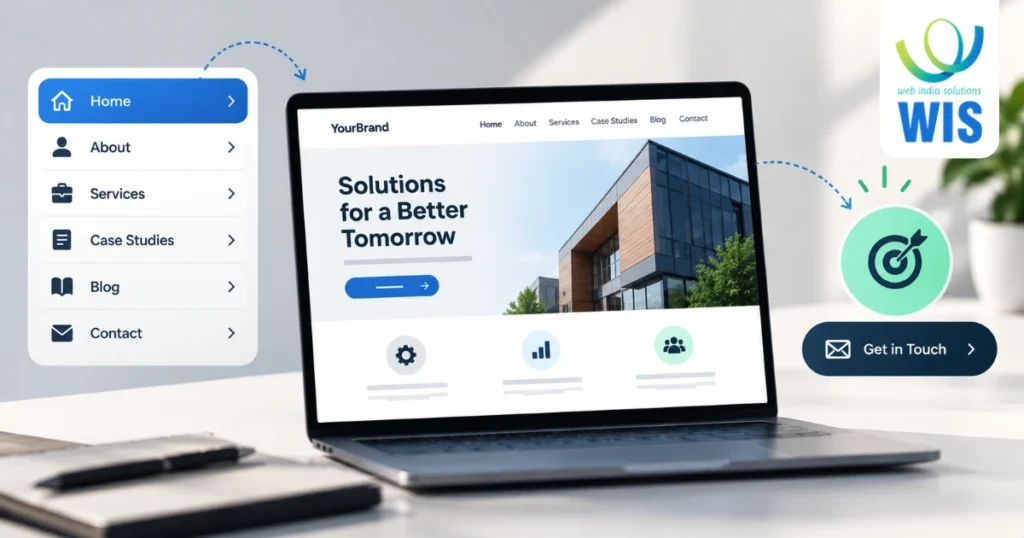
Good website architecture allows visitors to find information with minimal effort. Your navigation should be clear, with vital sections easily accessible.
A typical business website may include:
- Home
- About
- Services or Products
- Case Studies or Portfolio
- Blog or Resources
- Contact
The homepage should communicate the most important information quickly. A strong hero section normally includes a clear value proposition, supporting information, and a visible call to action.
Avoid overwhelming visitors with too many navigation options. The idea is to design a logical path from discovery to action.
Design for Mobile First
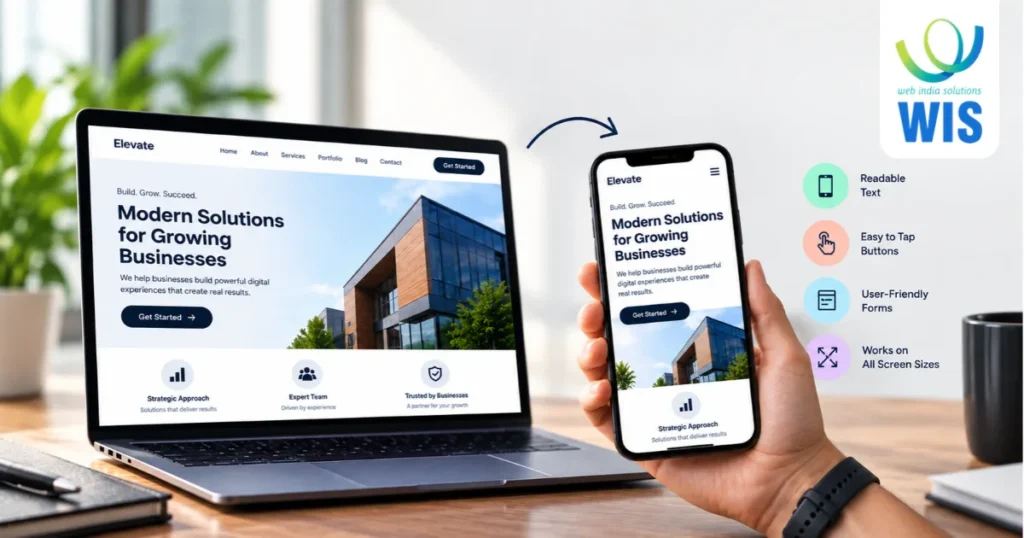
A large portion of website traffic comes from mobile devices, so mobile usability should be treated as a core requirement rather than an afterthought.
Responsive design should ensure that text remains readable, buttons are easy to tap, forms are comfortable to complete, and important information does not disappear on smaller screens.
Before launching the website, make sure it works on many screen widths. Pay close attention to navigation, menus, forms, pictures, pop-ups, and checkout/enquiry processes.
A beautiful desktop website can still lose conversions if the mobile experience is frustrating.
Make Website Speed a Priority
Website content that converts well should first be useful.
Each important service or product page should explain what is offered, who it is for, what problem it solves, what makes the solution valuable, and what the visitor should do next.
Content should also naturally address common questions. This improves the user experience while creating opportunities to target relevant search queries.
Avoid stuffing pages with keywords. Search engines and users both benefit more from clear, comprehensive content written around the actual topic.
Use Strong but Natural Calls to Action
A call to action should explain what visitors should do next. Generic buttons such as “Click Here” often provide little context.
More useful CTAs can be specific to the customer’s intent, for example:
Get a Free Consultation
Request a Website Quote
Book a Demo
Talk to an Expert
Place relevant CTAs at sensible spots on the page. A visitor who is ready to act should not have to look for a contact method.
Build SEO Into the Website From the Beginning
SEO should not be added after development is completed. The website structure, page URLs, headings, content, internal links, metadata, image optimisation, and technical foundation should be considered during development.
If you’re working with a Web Development Company In India, discuss SEO requirements before development begins. This can help ensure that the final website has a clean structure that supports both users and search engines.
A well-built website can also make future content marketing easier because new service pages, blog posts, landing pages, and resources can be added without creating structural problems.
Choose the Right Development Partner
The development partner you choose can influence the website’s performance, scalability, security, and maintainability.
When evaluating a website development agency india, don’t look only at the visual quality of its portfolio.Inquire about how the team addresses UX, mobile friendliness, website speed, SEO, security, integrations, maintenance, and future scalability.
A good development process should include discovery, planning, design, development, testing, launch, and post-launch support.
Questions You Should Ask Before Hiring a Development Agency
Before signing a project, clarify:
- How will the website be structured around business goals?
- Will the website be responsive across devices?
- How will performance and security be handled?
- Can the website be easily updated after launch?
- What support is available after the website goes live?
These questions can help you compare agencies based on long-term value rather than appearance alone.
Test Before and After Launch
Launching the website is not the end of the process. Before going live, test forms, links, navigation, mobile layouts, page speed, analytics, tracking, redirects, and important conversion paths.
After launch, monitor user behaviour and conversion data. If visitors are reaching a service page but rarely submitting the enquiry form, investigate what may be creating friction. If a particular landing page performs well, identify what makes it effective and apply those lessons elsewhere.
Conversion optimisation is an ongoing process rather than a one-time design task.
Conclusion
A high-converting business website in 2026 should combine clear messaging, intuitive UX, fast performance, mobile responsiveness, strong trust signals, SEO-friendly development, and purposeful calls to action.
The best websites are not built around decoration alone. They are built around the customer’s journey and the business outcome. By planning the website strategically from the beginning and continuously improving it after launch, you can create a digital presence that attracts visitors and turns more of them into genuine business opportunities.