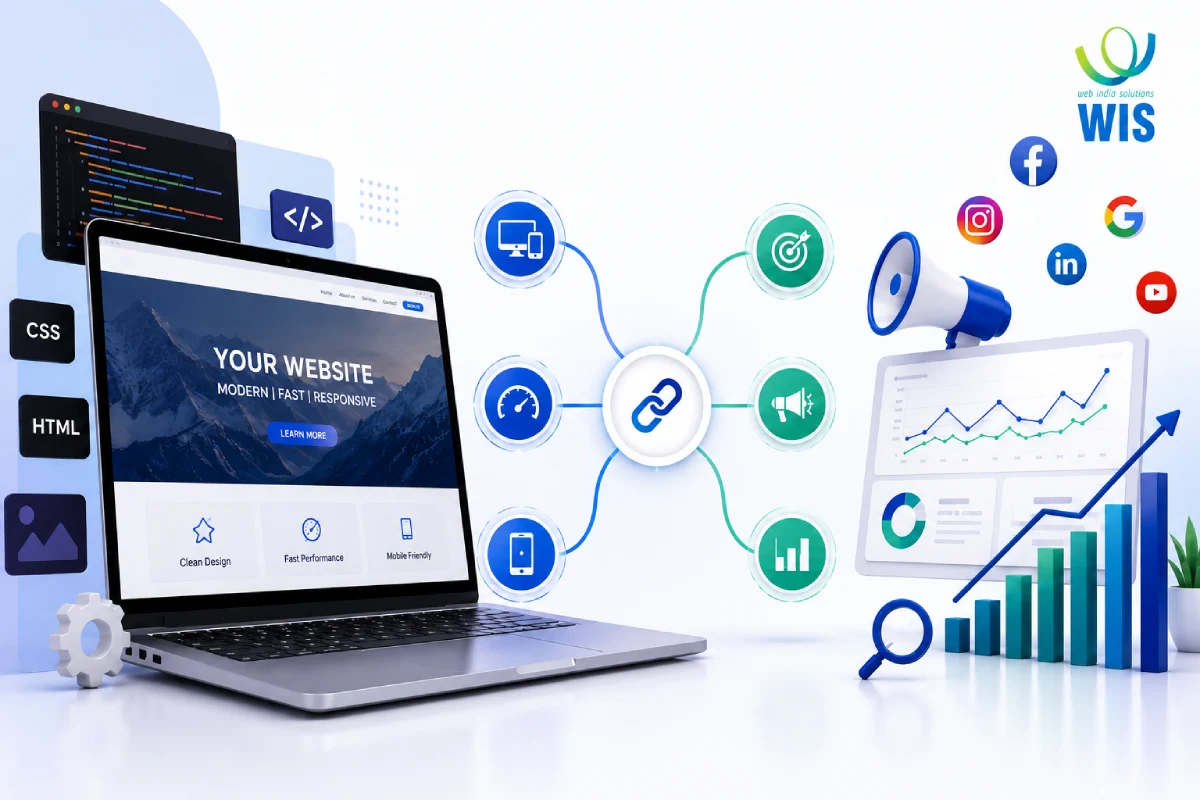
A successful online presence is not built through a website or digital marketing alone. A well-designed website gives a business a strong digital foundation, while digital marketing brings the right audience to that foundation. When both work together strategically, businesses can attract visitors, create better user experiences, generate leads, and increase conversions.
Many businesses invest heavily in marketing campaigns but overlook the importance of their website. Others build attractive websites but fail to promote them effectively. The real opportunity lies in combining both areas. A professional web development company in India can create a website that supports marketing goals, while digital marketing strategies can drive relevant traffic to it.
This article explores how website development and digital marketing complement each other and why businesses should treat them as connected parts of their digital growth strategy.
Why Website Development Matters for Digital Marketing
A website is often the central destination for digital marketing activities. Whether visitors arrive through Google search, social media, email campaigns, paid advertising, or online directories, they usually expect a website where they can learn more about a business.
If the website is slow, confusing, difficult to navigate, or poorly optimized for mobile devices, visitors may leave before taking action. Even an excellent marketing campaign can struggle when the destination page provides a poor experience.
Website development therefore needs to consider more than appearance. It should support speed, usability, search engine optimization, security, accessibility, and conversions.
A strong website provides digital marketers with the platform they need to turn traffic into meaningful business results.
How Website Design Influences Digital Marketing
Design and marketing are closely connected because the appearance and structure of a website influence how visitors interact with content.
A professional website should make important information easy to find. Navigation should be logical, pages should have clear headings, and calls to action should appear naturally throughout the user journey.
For example, a service business may use buttons such as “Request a Quote,” “Book a Consultation,” or “Contact Us.” These elements guide visitors toward the next step instead of leaving them uncertain about what to do.
Visual consistency also supports brand recognition. Colors, typography, imagery, layouts, and messaging should create a consistent identity across the website and marketing channels.
Website Speed and Marketing Performance
Website speed has a direct impact on user experience. People expect websites to load quickly, particularly when browsing on smartphones or slower connections.
A slow website can increase abandonment and reduce engagement. This can affect marketing performance because visitors generated through advertising or organic search may leave before exploring the business.
Developers can improve performance by optimizing images, reducing unnecessary scripts, using efficient coding practices, enabling browser caching, and selecting appropriate hosting solutions.
Page speed is especially important for paid advertising. Businesses spend money to bring visitors to landing pages, so those pages should load quickly and provide a smooth experience.
Mobile-Friendly Development Is Essential
Mobile devices account for a significant portion of internet usage. As a result, websites must work effectively across smartphones, tablets, laptops, and desktops.
Responsive website development allows layouts to adjust according to different screen sizes. Text should remain readable, buttons should be easy to tap, images should fit correctly, and navigation should remain simple.
Mobile-friendly development also supports search visibility and advertising performance. If users struggle to interact with a website on their phones, the business may lose potential customers even when its marketing campaigns are successful.
SEO Begins During Website Development
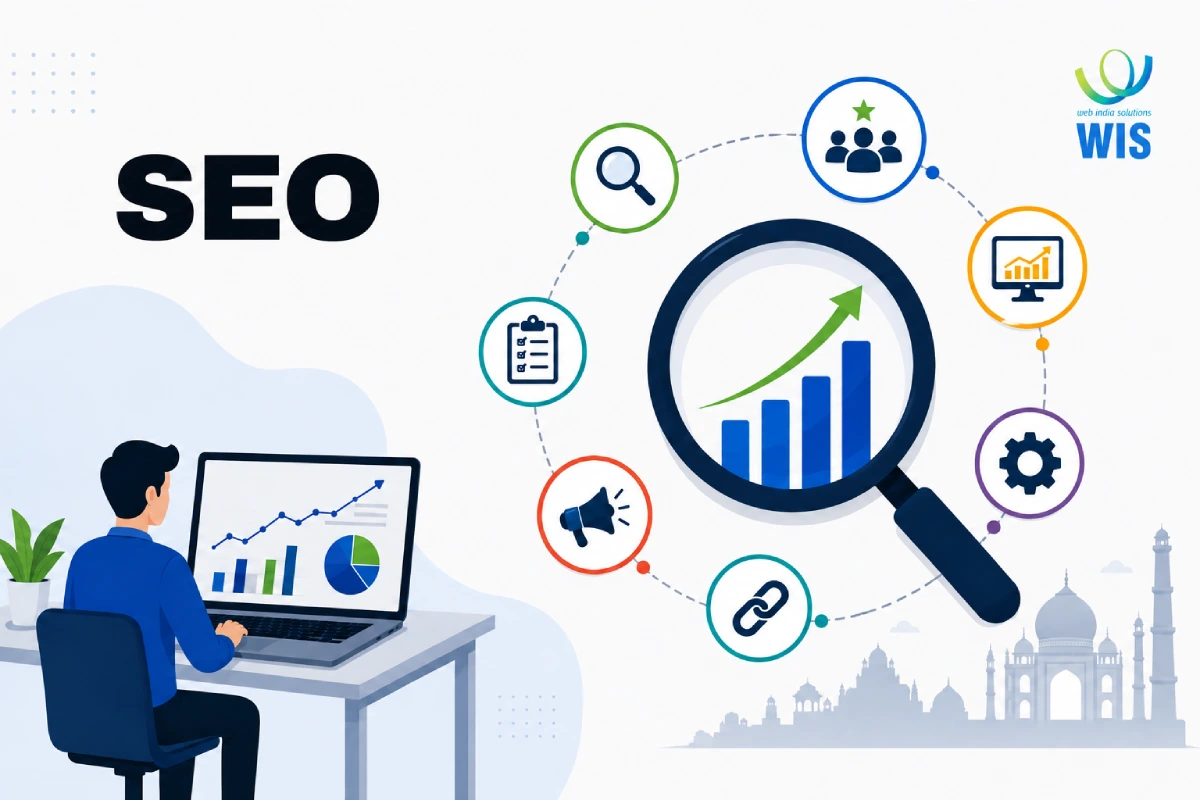
Search engine optimization is often considered a marketing activity, but technical website development plays an important role in SEO.
Search engines need to crawl, understand, and index website content. Developers can support this process by creating clean website structures, logical navigation, descriptive URLs, mobile-friendly pages, and appropriate technical elements.
Website architecture also matters. Important pages should be accessible through internal links, while related content can be connected to help both users and search engines understand the relationship between different pages.
Technical SEO issues such as broken links, duplicate pages, poor loading performance, and improper redirects can negatively affect organic visibility. Addressing these issues during development can create a stronger foundation for future SEO campaigns.
Content Needs a Strong Website Structure
Digital marketing depends heavily on content. Businesses publish blogs, service pages, landing pages, case studies, guides, videos, and other resources to attract and educate their audiences.
However, good content needs a suitable environment.
A website should provide clear spaces for different types of content. Blog categories can organize educational articles, service pages can explain offerings, and landing pages can focus on specific campaigns.
For instance, an SEO campaign may target several search terms through individual service pages and supporting blog content. If the website structure is confusing, users may struggle to find the information they need.
Good development makes content easier to organize, discover, and update.
Digital Marketing Brings Qualified Traffic
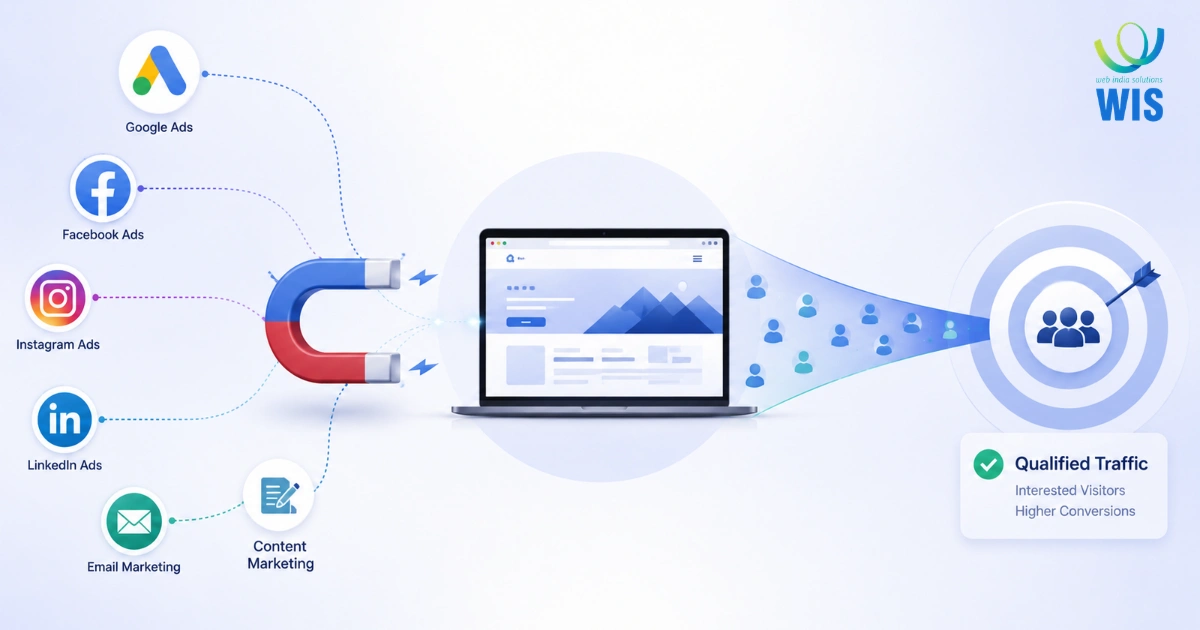
A website can be technically excellent and visually attractive, but it cannot generate consistent results if potential customers never discover it.
This is where digital marketing becomes important.
Search engine optimization can help a website appear for relevant search queries. Social media marketing can introduce the brand to new audiences. Paid advertising can deliver targeted visitors quickly, while email marketing can help businesses maintain relationships with existing customers.
Each channel can send visitors to specific website pages depending on their intent.
For example, someone searching for a particular service may be directed to a detailed service page. Someone responding to a promotional advertisement may land on a dedicated campaign page designed specifically for conversions.
Landing Pages Connect Marketing With Conversions
Landing pages are one of the clearest examples of website development and digital marketing working together.
A marketing campaign may generate thousands of impressions, but its success ultimately depends on what happens after someone clicks. A well-developed landing page should match the message of the advertisement and make the desired action simple.
Effective landing pages generally include:
- A crisp headline that reflects the visitor’s intent
- Relevant information that explains the value of the offer
- Strong but natural calls to action
- Trust signals such as testimonials, certifications, or case studies
- Simple forms that avoid requesting unnecessary information
The development team can ensure that the page works smoothly, while marketers can test headlines, content, offers, forms, and calls to action.
Analytics Connects Both Functions
One major advantage of combining website development with digital marketing is the ability to measure user behavior.
Tools such as Google Analytics and other analytics platforms can provide insights into traffic sources, page engagement, conversions, and user journeys.
This information can reveal important problems and opportunities.
For example, if a marketing campaign generates substantial traffic but visitors leave quickly, marketers and developers can investigate the landing page. The problem could be slow loading, unclear messaging, poor navigation, or a weak call to action.
Similarly, if one page generates significantly more conversions than another, marketers can study its structure and apply successful elements elsewhere.
Data therefore creates a feedback loop between development and marketing.
Conversion Rate Optimization
Driving traffic is only one part of digital marketing. Businesses also need to convert that traffic into leads, enquiries, registrations, purchases, or other valuable actions.
Conversion Rate Optimization, or CRO, focuses on improving the percentage of visitors who complete a desired action.
Website developers and marketers can work together to test different page layouts, headlines, buttons, forms, images, and content structures.
Small changes can sometimes produce meaningful improvements. A simpler form, clearer call to action, or better page structure may make it easier for visitors to take the next step.
This is why website development should not be treated as a one-time project. Websites can continuously evolve based on user behavior and marketing data.
Security and Trust Affect Marketing Results
Website security is another area where development supports marketing.
Visitors are more likely to trust a business when its website looks professional, functions correctly, and protects their information. Security certificates, secure forms, privacy information, and reliable website functionality can contribute to user confidence.
Security issues can also damage a brand’s reputation and interrupt marketing campaigns. A compromised website may display warnings, become inaccessible, or lose search visibility.
Regular updates, secure hosting, backups, monitoring, and maintenance can reduce these risks.
Working With the Right Development Partner
Businesses should look for a development partner that understands marketing objectives rather than focusing only on coding and design.
A capable website development agency india businesses choose should be able to understand how technical decisions influence SEO, user experience, analytics, landing pages, and conversions.
Communication between marketing and development teams is equally important. Before development begins, both teams should understand the target audience, business objectives, customer journey, content strategy, and conversion goals.
This creates a website that is designed not simply to look good but to perform a specific business function.
The Benefits of an Integrated Approach
When website development and digital marketing are planned together, businesses can create a more consistent digital strategy.
The major benefits include:
- Better user experience across devices and marketing channels
- Stronger technical foundations for SEO
- More effective landing pages and conversion paths
- Better use of analytics and performance data
- Greater flexibility for future marketing campaigns
Instead of treating development as a separate technical task, businesses can make it part of their overall growth strategy.
Website Development and Digital Marketing Should Evolve Together
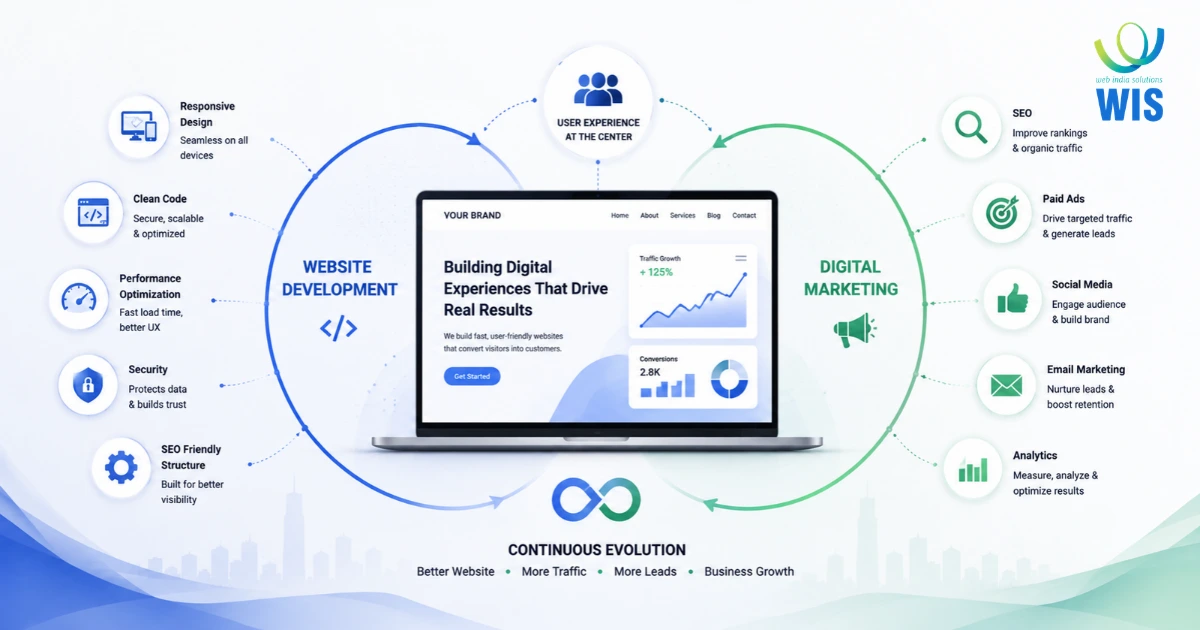
The digital environment continues to change. Search engine algorithms, user expectations, advertising platforms, mobile technologies, and website standards are constantly evolving.
A website created today may require updates in the future. New marketing campaigns may need dedicated landing pages. Analytics may reveal pages that need improvement. Customer feedback may highlight usability problems.
For this reason, businesses should think of website development as an ongoing process rather than a project that ends when a website goes live.
Marketing provides insights into what audiences want, while development provides the technical ability to respond to those insights. Together, they create a continuous cycle of testing, learning, and improvement.
Conclusion
Website development and digital marketing are two sides of the same digital strategy. A website provides the foundation, while marketing attracts people to it. Without effective development, marketing traffic may fail to convert. Without marketing, even a well-developed website may struggle to reach its intended audience.
Businesses that bring these functions together can create faster, more user-friendly, search-friendly, and conversion-focused websites. Whether the goal is generating leads, increasing online sales, building brand awareness, or attracting organic traffic, development and marketing should work toward the same objectives.
Choosing an experienced Web Development Company In India can help businesses build a strong technical foundation, while partnering with a capable website development agency india businesses trust can support long-term website performance and digital growth.
The strongest online presence is not created by development or marketing alone. It is created when both teams work together with a shared understanding of the customer, the brand, and the business goals.
Frequently Asked Questions
1. How much does it cost to make a website?
The cost of making a website depends on its design, features, number of pages, and functionality. A basic business website may cost less, while e-commerce or custom websites require a higher investment. Your budget should also consider domain, hosting, maintenance, and ongoing updates.
2. How do I make website for my business?
To create a website for your business, work with a professional web development agency that can design a fast, mobile-friendly, and SEO-ready website. Start by defining your goals, services, target audience, and preferred design. A good agency can handle the domain, hosting, website design, development, content, local SEO, and ongoing maintenance to help your business attract and convert customers online.
3. How to make your website show on google
A professional web development agency can make your website more visible on Google by building it with SEO-friendly structure, fast loading speeds, mobile responsiveness, and search-engine-friendly content. The agency can also set up Google Search Console, optimize important pages, improve technical SEO, and ensure your website is ready to rank for relevant searches and local customers.
4. What is responsive web development?
Responsive web development is the process of creating websites that automatically adjust to different screen sizes and devices, including desktops, tablets, and smartphones. A responsive website provides a smooth user experience, improves mobile usability, and supports better SEO and search visibility.
5. What is a full stack developer?
A full-stack developer is a professional who can work on the front and back end of a website or web application. They handle everything from the user interface and design to server-side programming, databases, APIs, and website functionality.